Witch Inside House Halloween Color Pages
A Cozy, Playful Vibe—But Is It Embroidery-Ready?
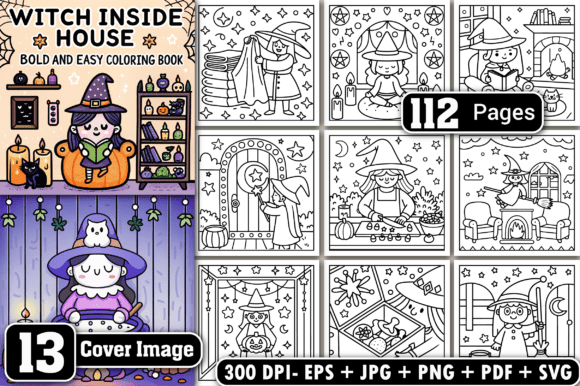
First impression? This isn’t a dramatic haunted mansion or a gothic spellbook—it’s warm, approachable, and intentionally soft-edged. The “Witch Inside House Halloween Color Pages” bundle leans into whimsy: a little witch in a tiny cottage, cauldron bubbling, cat perched on the windowsill, maybe a broom leaning by the door. It’s designed for coloring, yes—but as an embroidery designer who’s stitched hundreds of holiday-themed pieces for Etsy shops and boutique clients, I immediately ask: *What happens when this becomes thread on fabric?*
Where It Shines: Tote Bags, Tea Towels & Nursery Decor
I recently prepped a custom embroidered tote for a local kids’ bookstore launching their October storytime series. We needed something friendly—not scary—yet unmistakably Halloween. Witch Inside House Halloween Color Pages fit perfectly. Its clean outlines, generous negative space, and balanced proportions translated beautifully into a 4-inch satin-stitched patch (with subtle fill-stitch details in the roof and door). Customers responded warmly: parents loved the gentle magic; teachers said it felt “inviting, not intimidating.” That same energy works on tea towels, pillow covers, and baby onesies—especially when paired with soft pastel or heathered fabrics.
Real-World Fit for Small Business Makers
- Etsy sellers: This design reads well in digital mockups—no pixelation, no fussy linework—so your listings look polished even before stitching.
- Craft fair vendors: It scales reliably from 3” (cap front) to 6” (apron pocket), making it versatile across product lines without redrawing.
- Apparel decorators: On medium-weight cotton or fleece, the shapes hold clarity—even at lower stitch densities—so you’re not overloading your machine or compromising durability.
Watch These Spots Before You Stitch
Because it originated as coloring pages—not embroidery files—some elements need thoughtful adaptation. The windowpanes, tiny stars, and witch’s hat buckle are charming on paper but risk disappearing in dense fill stitch or on textured fabric like terry cloth or heavy twill. On a curved surface like a baseball cap, those delicate interior lines may distort unless digitized with strategic underlay and reduced detail density.
Also worth noting: the “cozy house” framing means most compositions include a defined outer border—great for patches or framed hoop art, but potentially limiting on garments where you want seamless integration (e.g., center-chest sweatshirt embroidery). If you’re planning layered items (like an embroidered patch sewn onto a denim jacket), test how the outer shape interacts with seam allowances and fabric drape.
Thread, Fabric & Finish: What Makes It Feel Handmade, Not Generic
Witch Inside House Halloween Color Pages thrives with intentional contrast. Try matte black thread on oatmeal linen for a modern, artisanal look—or bright orange and purple on navy cotton for cheerful kidswear. Avoid ultra-thin fabrics (like lightweight rayon challis) without proper cutaway stabilizer—the open interior spaces can pucker if the base fabric shifts. On dark garments, skip light gray or pale yellow fills; they’ll vanish. Instead, lean into rich jewel tones or crisp white for legibility and impact.
Stitch density matters here more than you’d think. Too dense, and the cozy charm turns stiff and cartoonish. Too sparse, and the house loses definition. Aim for moderate fill stitch (65–75% density) and reinforce key outlines with a clean satin stitch—especially around the doorframe and roofline. That small lift makes the finished product feel intentional, not printed.
Commercial Use? Proceed With Clarity
This is a Graphics asset from Coloring Pages Amp—meaning its core value lies in adaptability, not out-of-the-box embroidery readiness. Before listing embroidered products on Etsy or bundling it into a craft kit, verify licensing terms directly with the source. Some coloring page bundles allow commercial use of *derivative works* (like your stitched version), but prohibit resale of the original vector or PNG. When in doubt: digitize it yourself or hire a digitizer familiar with kid-friendly Halloween motifs. That extra step ensures your finished product stands apart—and protects your shop’s reputation.
Practical Designer Notes—No Guesswork Needed
- Always test Witch Inside House Halloween Color Pages on scrap fabric matching your final garment—especially stretchy knits or fuzzy fleece.
- Check small details (like the witch’s wand tip or cat’s ear) in black-and-white mockups—they often read better than color previews suggest.
- Compare how it looks on light vs. dark backgrounds before choosing thread palettes.
- Use medium-weight cutaway stabilizer for structured items (tote bags, patches); tear-away works fine for stable wovens (tea towels, aprons).
- If offering personalized versions (e.g., adding a name below the house), leave at least ½” vertical clearance—running stitch names integrate cleanly without crowding the scene.
- For holiday gift sets, pair it with coordinating designs (pumpkin, bat, candy corn) that share similar line weight and spacing—this builds visual cohesion across your collection.
Final Thought: Charm With Craftsmanship
Witch Inside House Halloween Color Pages won’t wow with technical complexity—but it wins where it counts: emotional resonance, ease of execution, and quiet professionalism. It’s the kind of design that makes a baby’s first Halloween onesie feel special, turns a plain kitchen towel into a seasonal staple, and gives a small shop owner confidence to launch a cohesive holiday line without over-engineering. Just remember: its strength lies in thoughtful translation—not direct transfer. Treat it like raw material, not a finished embroidery file, and you’ll get a handmade product that feels both joyful and authentically yours.