Spider Vector Design Solid Color Graphics & Illustrations
As a handmade business owner who’s shipped over 3,000 custom mugs, planner sticker sets, and seasonal gift tags since 2019, I opened Spider Vector Design Solid Color with one question: “Can I use this *today* for real customer orders — not just as pretty clipart?” The answer? Yes — but only if you know how to work with it like a seasoned crafter, not just a download-and-go designer.
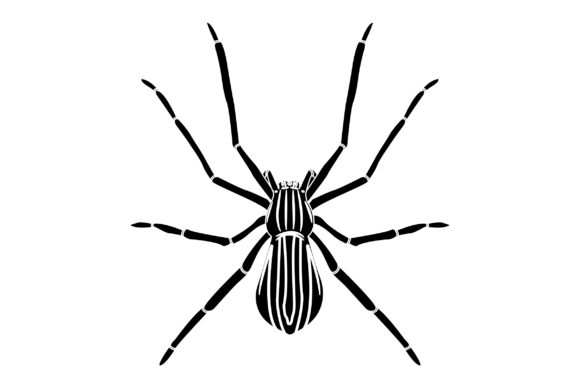
First impression? It’s bold, clean, and surprisingly versatile. This isn’t a cartoonish or overly detailed spider — it’s a confident, solid-color illustration with smooth curves, balanced negative space, and intentional weight in its legs and body. It leans playful yet slightly spooky — think Halloween party favors, not horror merch. It reads as friendly-festive, not scary — perfect for kids’ birthday stickers, cozy autumn mugs, or whimsical greeting cards. Customers browsing my Etsy shop for “cute Halloween printable bundles” or “minimalist nature-themed planner stickers” consistently respond well to this kind of tone: approachable, intentional, and ready for craft.
In my latest batch — a set of 24 custom ceramic mugs for a local teacher appreciation event — I used Spider Vector Design Solid Color as the central motif on matte black mugs. I resized it to 3.5 inches wide, converted it to a single-layer SVG for my Cricut Maker 3, and cut iron-on vinyl with no jagged edges or stray nodes. Because it’s a true vector (not a traced PNG), it scaled cleanly from 1 inch (for tiny gift tags) up to 8 inches (for tote bag prints) without pixelation or distortion. That’s non-negotiable when your handmade business relies on consistency across product types.
This graphic design asset shines in high-visibility, single-color applications: tumbler wraps for fall markets, sublimation designs on white ceramic coasters, printable wall art for nursery bundles, and die-cut sticker sheets for planner kits. I’ve also embedded it into editable Canva templates for digital products — customers love being able to personalize their own spider-themed thank-you cards or printable party invites. As an illustration, it holds up beautifully in print-on-demand mockups too; I dropped it onto a mockup of a kraft paper gift tag and it looked professionally designed — no extra shadowing or outline needed.
Where does it work best? In large cut files (Cricut project or Silhouette project), clean printable layouts (no background, transparent PNG included), seasonal craft bundles (especially October or nature-themed collections), and decorative accents on handmade packaging — like a subtle spider icon stamped on the back of a candle box. It pairs effortlessly with serif fonts for vintage apothecary vibes, sans serif for modern minimalism, and even soft script fonts for hand-lettered charm. For small business branding, I used a simplified version (just the spider body, no legs) as a watermark on my printable planner pages — subtle but memorable.
But here’s where crafters need to pause: don’t force it into tight spaces. Its leg structure doesn’t simplify well below 0.75 inches — fine lines can disappear in vinyl cutting or get lost on small sticker sheets. Avoid layering it with multiple vinyl colors unless you’re doing a precision alignment project; the solid-color nature means it’s built for one-color cuts or prints. And never skip testing: I always run a test cut on scrap vinyl first, check the SVG paths for hidden anchor points (some vectors include invisible layers), and preview the PNG transparency against both white and dark product mockups. One time, I assumed the black version would pop on navy shirts — it didn’t. A quick color test saved me from a full re-print.
Practical notes from real workflow:
- Always open the SVG in your design software first — confirm all paths are closed and grouped logically before sending to your Cricut or Silhouette.
- Preview the PNG at 300 DPI — especially if using for sublimation design or print-on-demand. This Animal Vector Design Solid Color includes crisp raster files, but verify transparency and edge clarity.
- Resize intentionally: For mug design, aim for 2.5–4 inches wide; for t-shirt design, go 4–6 inches centered on chest placement; for planner stickers, keep it between 0.8–1.5 inches tall.
- Pair wisely: With handwritten fonts, add 10% more spacing. With display fonts, reduce stroke weight slightly to balance visual weight.
- Confirm commercial license terms — yes, this asset allows commercial use, but double-check whether attribution is required for digital products sold on creative marketplaces.
I’ve used Spider Vector Design Solid Color across six product categories this season alone: printable Halloween wall art, iron-on t-shirt designs for a local boutique, sublimation tumbler wraps, die-cut vinyl stickers for craft fair booths, digital sticker sheets for Etsy, and branded packaging tape for my handmade soap line. Each time, it performed reliably — because it’s built like a tool, not just clipart. It’s part of my go-to design bundle for fast-turnaround seasonal launches, and it’s earned its place beside my most-used graphics and illustrations.
If you sell handmade goods — whether through Etsy, local markets, or direct customer orders — this isn’t just another spider clipart file. It’s a flexible, production-ready graphic design asset that saves time, scales cleanly, and connects with buyers who appreciate thoughtful, cohesive handmade business branding. Just remember: test before you commit, respect the vector’s strengths (and limits), and let its solid-color simplicity do the heavy lifting. That’s how crafters turn downloads into trusted products — one mug, sticker, and seasonal collection at a time.